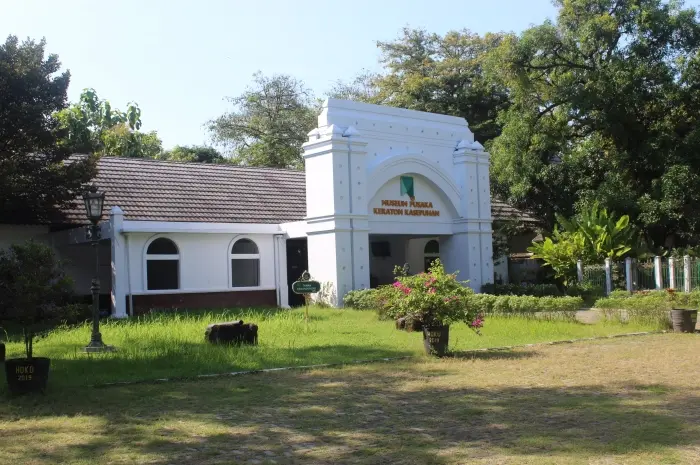
Keraton Kasepuhan in Cirebon preserves the rich history of the Cirebon Sultanate, a blend of traditional architecture, and interesting cultural festivals.
Keraton Kasepuhan in Cirebon is a cultural and historical gem in Java that offers beautiful architecture, rich traditions, and traces of the glorious Cirebon Sultanate.
This palace was established as the center of government at that time, combining Javanese and Sundanese culture in every detail of its building.
Today, Keraton Kasepuhan is a silent witness to the meeting of Islamic and Hindu cultures, as well as Chinese and European influences, making it one of the most valuable historical sites in West Java.
History of the Kasepuhan Palace in Cirebon
Keraton Kasepuhan was founded in 1430 by Prince Cakrabuana, son of Prabu Siliwangi from the Pajajaran Kingdom. The palace building was originally called Keraton Pakungwati, named after the daughter of Prince Cakrabuana, namely Ratu Pakungwati.
After being established, the palace was handed over to Sunan Gunung Jati, who then developed the palace as a center of government as well as the spread of Islam in the Cirebon area.
Over time, the palace changed its name to Keraton Kasepuhan, and until now it has become one of the witnesses to the history of the development of Islam and culture in Java.
Keraton Kasepuhan covers an area of 25 hectares with various buildings that each hold their own history. One of them is Siti Hinggil, which means “high ground” and is the first building seen when entering the palace complex.
Made of red brick and carrying the Majapahit architectural style, this building is a symbol of the continuity of Hindu-Buddhist traditions which are then combined with Islamic elements.
The beauty of the palace’s architecture is also enriched with touches of Chinese and Dutch culture that can be seen in the ornaments that decorate every corner of the building.
Main Attractions at Kasepuhan Palace
1. Main Gate and Kreteg Pangrawit
The main entrance of Keraton Kasepuhan offers the charm of architecture with a strong traditional style. There are two main gates, namely Kreteg Pangrawit in the north which is an iconic bridge, and Lawang Sanga in the south.
Passing through Kreteg Pangrawit, visitors will arrive at the main courtyard of the palace, where there are two important buildings, namely Pancaratna and Pancaniti.
Pancaratna is a building used to welcome important guests from villages around Cirebon, while Pancaniti, which means “superior road,” was a military training area and courthouse in the past.
These two buildings not only function as places of activity, but also serve as evidence of the rich history and government structure of the Cirebon Sultanate in the past.
2. The Beauty of Architecture and Historical Ornaments
Keraton Kasepuhan is known for its diverse architecture, combining elements of Java, Majapahit, Islam, as well as influences from China and the Netherlands. Red brick walls, traditional ornaments, and distinctive building structures give this palace its own charm.
Inside the palace, there is a pavilion and the Sultan’s throne which reflects the glorious past of the Cirebon Sultanate.
Every carving and ornament on the walls and pillars of the palace has its own symbol and meaning, reflecting the noble values upheld by the sultanate. The beauty and precision of this architecture makes the palace look magnificent and sturdy even though it is very old.
3. Cultural Festival and Traditional Parade
Keraton Kasepuhan often hosts various cultural events, such as cultural parades and traditional festivals, which aim to preserve local culture.
At the cultural parade, various districts around Cirebon also participate in presenting their unique attractions, such as traditional dances, music, and traditional clothing.
In addition to the procession, Keraton Kasepuhan also holds the Grebeg Syawal, Nusantara Mask Festival, and Nusantara Palace Festival, all of which showcase various local arts and cultures.
These events attract tourists to come and witness the diversity of Indonesian culture in one place, making this palace a rich cultural and educational center.
4. Siti Hinggil Building: Place of Grand Ceremonies
Siti Hinggil is a building with a name that means “high ground.” This building has five main structures without walls, creating an open atmosphere and serves as a place for the Sultan to watch various state events and palace ceremonies.
In the center of the building is Malang Semirang which has six pillars, which symbolize the pillars of faith in Islamic teachings.
The architecture of Siti Hinggil shows how Hindu-Buddhist and Islamic cultures were closely intertwined in the daily life of the Cirebon Sultanate. Each pillar and ornament in this building has a meaning that enriches the cultural value of the palace.
5. Museum of Heritage and Historical Collections
other valuable objects. The most famous collection is the Singa Barong Carriage, a carriage that was once used by Sunan Gunung Jati.
The Lion Barong Chariot has a unique design, with a dragon’s head, a lion or tiger’s body, and an elephant’s trunk, symbolizing the blend of Javanese, Chinese, and Indian cultures. This collection is not only historical evidence, but also a symbol of cultural harmony maintained by the Cirebon Sultanate.
Location, Entrance Ticket Prices and Access to Kasepuhan Palace
Kasepuhan Palace is located in the heart of Cirebon City, precisely on Jl. Kasepuhan No.43, Kesepuhan, Lemahwungkuk District, Cirebon.
Its strategic location makes it easy for visitors to reach the palace from various directions. Like other palaces in Java, Keraton Kasepuhan also faces the town square, with the Great Mosque of Sang Cipta Rasa in the west as a complement to the palace complex.
To enjoy the beauty and learn history at Keraton Kasepuhan, visitors only need to pay an entrance ticket of IDR 10,000 for students and IDR 15,000 for the general public.
The palace’s operating hours are from 08.00 to 17.00 WIB every day, so visitors have enough time to explore the palace complex and enjoy every part of it.
Facilities at the Kasepuhan Palace
Keraton Kasepuhan is equipped with public facilities such as parking areas, toilets, and places of worship for the convenience of visitors.
Information about the history of the palace is provided in the form of plaques and brochures around the area, and visitors who want to get a more in-depth explanation can ask for help from the officers around the location.
Tips for Visiting the Kasepuhan Palace
- Come in the Morning or Evening : The best time to visit Keraton Kasepuhan is in the morning or evening, when the weather is still cool and the sun is not too hot.
- Wear Comfortable Clothes and Shoes : With such a large complex and so many areas to explore, wear comfortable clothes and shoes suitable for long walks.
- Respect Historical Sites : Considering that the palace is a historical site, visitors are expected to maintain cleanliness, not damage buildings, and respect the rules that apply within the palace.
Keraton Kasepuhan in Cirebon offers a valuable experience for anyone who wants to explore the history and culture of the Cirebon Sultanate.
From unique architecture, heritage museum collections, to regularly held cultural events, this palace is an ideal educational and tourist destination.
With affordable ticket prices and complete facilities, Keraton Kanoman is a place worth visiting to appreciate the richness of Indonesia’s cultural heritage.