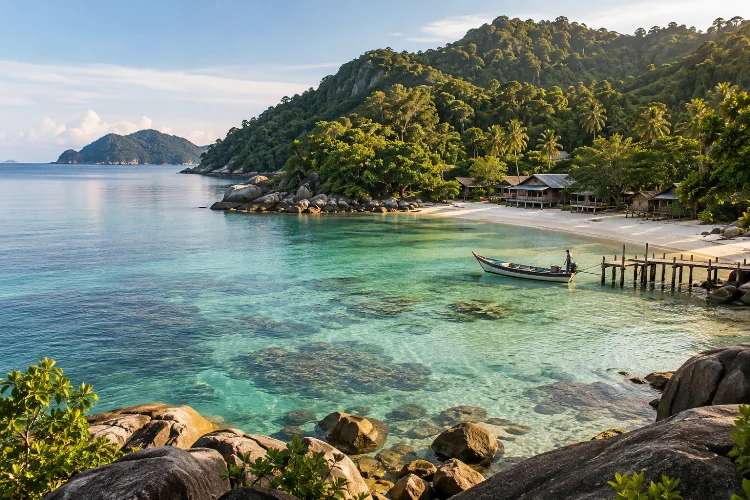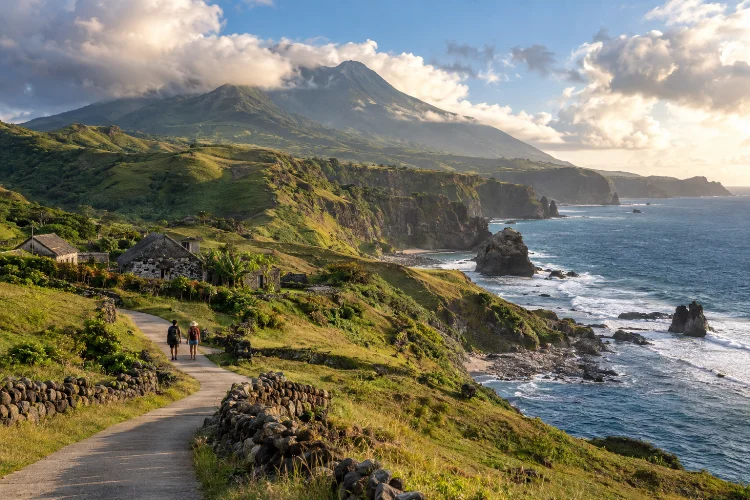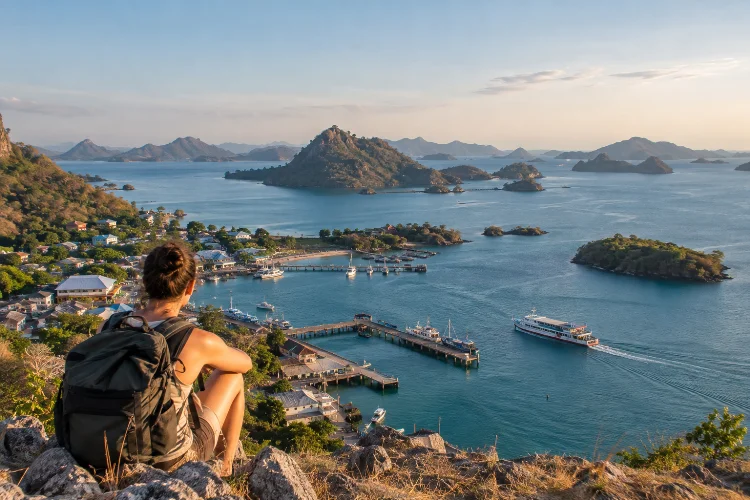
Okinawa is often imagined through the resorts, beaches, and shopping districts of its main island. Those places are easy to reach and enjoyable, but they represent only a small part of Japan’s southern archipelago.
Discovering Japan’s remote islands beyond Okinawa’s main resorts opens the door to subtropical forests, tiny Ryukyu villages, coral lagoons, wild coastlines, and islands where ferries still shape the rhythm of everyday life.
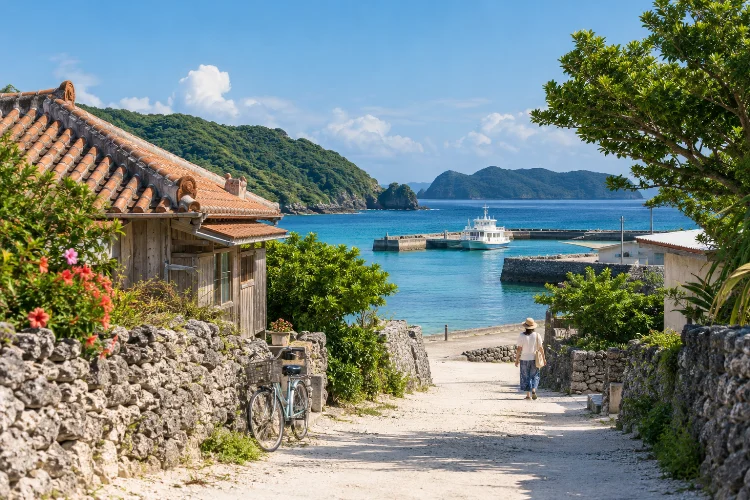
Instead of large hotels and busy sightseeing routes, you might find family-run guesthouses, bicycles parked beside white-sand roads, or a harbor that becomes almost silent after the last ferry leaves.
The variety is impressive. Iriomote is dominated by mountainous forest and mangroves, Taketomi preserves a traditional Ryukyu streetscape, the Kerama Islands offer exceptionally clear water, and faraway Yonaguni sits at Japan’s western edge.
These islands reward travelers who are prepared to slow down.
Start With Ishigaki as Your Yaeyama Gateway
If you want to explore Okinawa’s more distant islands without making logistics unnecessarily difficult, Ishigaki is one of the best places to begin.
The island functions as the transport hub for the Yaeyama group. Ferries connect Ishigaki with nearby islands including Taketomi and Iriomote, allowing travelers to build a multi-island itinerary without returning to Okinawa’s main island between every stop.
This is where planning becomes important. Distances between islands may look short, but weather can affect boat services, especially during periods of strong wind or rough seas.
Rather than treating Ishigaki only as an airport stop, consider spending a night there before and after your outer-island trip. That extra buffer makes ferry connections much less stressful and gives you time to explore local food markets and beaches.
Iriomote: Trade Resort Life for Jungle Adventure
Iriomote feels completely different from the resort side of Okinawa.
It is the largest island in the Yaeyama group, and much of its interior is covered by dense subtropical forest. Visitors typically come for mangrove kayaking, river cruises, trekking, waterfalls, and wildlife rather than beachfront hotel pools.
Iriomote is also part of the UNESCO World Heritage property covering Amami-Oshima, Tokunoshima, northern Okinawa, and Iriomote. The site was inscribed in 2021 because of its exceptional biodiversity and endemic species.
That protected status also means responsible tourism matters.
UNESCO has identified tourism pressure, wildlife roadkill, invasive species, and disturbance to threatened animals as conservation concerns. Driving slowly and joining experienced local guides are therefore more than travel tips – hey help reduce pressure on a fragile environment.
High-speed ferries from Ishigaki generally take about 35–50 minutes, depending on the port.
Taketomi: Explore Ryukyu Culture at Bicycle Speed
Taketomi is much smaller than Iriomote and can be reached from Ishigaki in roughly 10-15 minutes by high-speed boat. Yet the atmosphere changes almost immediately.
The central village is known for stone walls, white-sand streets, hibiscus hedges, traditional red-tiled roofs, and shisa guardian figures. It has been designated as a preservation district for groups of traditional buildings.
The best way to experience Taketomi is slowly.
Rent a bicycle or walk rather than trying to race between attractions. Kondoi Beach provides an easy seaside stop, while the West Pier is especially popular around sunset.
The island also keeps cultural traditions alive through practices such as Yaeyama minsah weaving.
Although Taketomi is possible as a day trip, staying overnight changes the experience. After most day visitors leave, the village streets become noticeably quieter and the island’s pace feels much more natural.
Hateruma: Travel to Japan’s Southernmost Inhabited Island
For a stronger sense of remoteness, continue from Ishigaki to Hateruma.
Located about 60 kilometers southwest of Ishigaki, Hateruma is Japan’s southernmost inhabited island. Its landscape is relatively flat, with sugarcane fields, quiet roads, coral beaches, and wide horizons.
Nishihama Beach is the obvious coastal highlight, famous for intensely blue water. But Hateruma becomes even more memorable after dark.
Because the island has little artificial light, night skies can be spectacular. Under suitable conditions, visitors can even observe the Southern Cross, particularly during its seasonal viewing period.
The island has limited public tranport, so bicycles and rental vehicles are useful.
Ferries from Ishigaki usually take around 60–100 minutes, but conditions at sea can influence services. Staying overnight is worth considering rather than depending entirely on a same-day return.
Yonaguni: Reach Japan’s Far Western Edge
Yonaguni is one of Okinawa’s most distinctive destinations.
It is the westernmost inhabited island in Japan and considerably more isolated than Taketomi or Iriomote. JNTO notes that it can be reached by flights from Ishigaki or Naha, while ferry services from Ishigaki are much less frequent and the crossing can be rough.
Diving is the major attraction.
During winter, the waters around Yonaguni are known for hammerhead shark encounters, while experienced divers may also explore the famous underwater formation commonly called the Yonaguni Monument.
Its origin remains debated, with interpretations ranging from natural geological formation to human modification.
Above water, travelers can see small Yonaguni horses roaming parts of the island.
Yonaguni works best for people who genuinely enjoy remote places rather than visitors looking for constant entertainment. Accomodation and services are limited compared with major Okinawan destinations, which is exactly why the island feels different.
Aka and Zamami: Discover the Quieter Kerama Islands
You do not have to travel as far as Yaeyama to escape Okinawa’s main resort areas.
The Kerama Islands lie west of Naha and are known for exceptionally clear water commonly described as “Kerama Blue.” The main inhabited destinations include Tokashiki, Zamami, and Aka.
Aka is particularly appealing if you want a small-scale island atmosphere.
The island lies about 40 kilometers west of Naha and can be reached in roughly 50 minutes by high-speed boat. It has coral reefs, quiet beaches, observation decks, and a compact village near the harbor.
Nearby Zamami offers snorkeling, diving, beaches, hiking viewpoints, and winter whale-watching opportunities.
Instead of visiting only for the day, spend a night or two. Once ferry crowds disappear, the islands become much calmer, and staying locally gives you greater flexibility for snorkeling or exploring neigboring beaches.
Kume Island: Find a More Accessible Remote Escape
Not every remote island requires complicated ferry connections.
Kume Island lies around 100 kilometers west of Okinawa’s main island and can be reached by a flight of roughly 35 minutes from Naha or by a longer ferry journey.
Its biggest visual attraction is Hatenohama, a roughly seven-kilometer sandbar accessible by boat tours.
But Kume has more depth than a beach excursion. Ruins of historic castles reflect the island’s role in the Ryukyu Kingdom era, when it participated in maritime trade networks linking Okinawa with China.
The island also offers diving, hiking, wetlands, local awamori, and seafood.
Because Kume combines reasonable access with relatively low visitor density, it can be a good first step for travelers who want a quieter Okinawan island without committing to the more complicated logistics of Yonaguni or Hateruma.
Plan Around Ferries, Weather, and Island Time
Remote island travel in Okinawa requires a different mindset from a city itinerary.
Do not schedule every connection too tightly. Ferries can be delayed or cancelled because of sea conditions, and accomodation options become more limited the farther you travel from Ishigaki or Naha.
It is also worth spending longer on fewer islands.
A rushed itinerary of five islands in five days usually means seeing ports rather than places. A better approach might be three nights on Iriomote, one or two on Taketomi, followed by several days on Hateruma or Yonaguni.
Pack light, carry some cash, confirm boat schedules shortly before departure, and respect local conservation rules.
Remote islands are appealing precisely because large-scale tourism has not completely reshaped them. Traveling slowly helps keep them that way.
Discovering Japan’s remote islands beyond Okinawa’s main resorts reveals a side of the country that feels surprisingly far from the usual image of Japan.
Iriomote offers mangrove forests and rare wildlife, Taketomi preserves Ryukyu village culture, Hateruma delivers extraordinary skies, Yonaguni feels truly frontier-like, while Aka, Zamami, and Kume provide easier escapes into quieter island life.
The key is not to visit everything.
Choose one island group, leave room for weather changes, and stay long enough to experience mornings and evenings after day-trippers have gone.
Start with Ishigaki for the Yaeyama Islands or Naha for Kerama and Kume, then let ferries, beaches, villages, and island rhythms shape the journey rather than forcing every destination into a packed schedule.