The Philippines is famous for Boracay’s white sand, Palawan’s limestone lagoons, Cebu’s beaches, and Siargao’s surf breaks. They are spectacular destinations, but a country made up of thousands of islands has far more to offer than its headline locations.
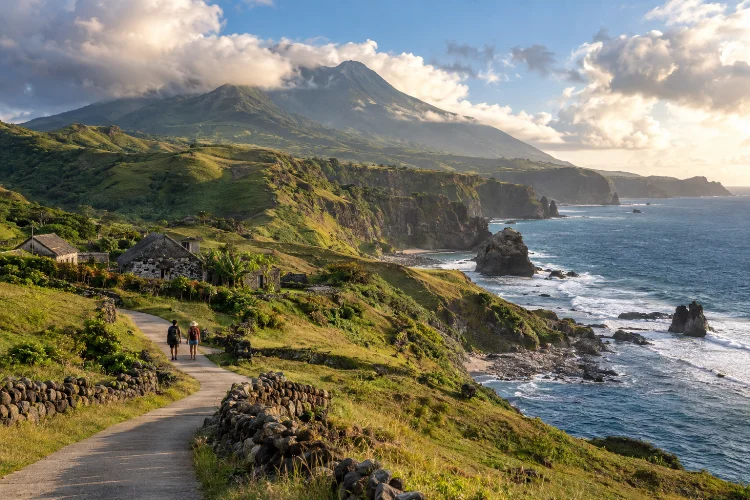
Exploring the Philippines through lesser-known island provinces takes you into a slower, more varied version of the archipelago. In Batanes, stone houses sit beneath windswept green hills.
Romblon mixes marble craftsmanship with mountainous wilderness, while Camiguin packs volcanoes, waterfalls, historic ruins, and beaches into a remarkably compact island.
Then there are provinces such as Dinagat Islands and Marinduque, where tourism remains smaller in scale and local communities still shape much of the travel experience.
These places sometimes require more patience. Transport connections may be less frequent, accomodation choices can be limited, and weather matters enormously when ferries are involved. Yet that inconvenience often becomes part of the appeal.
Instead of rushing through attractions, you get a chance to experience how island life actually works.
Batanes: Experience the Philippines at Its Northern Edge
Batanes barely resembles the tropical-beach stereotype many travelers associate with the Philippines.
Located at the country’s far north, the province is famous for dramatic hills, powerful coastlines, traditional Ivatan culture, and stone houses designed to withstand difficult weather.
The Philippine Department of Tourism describes Batanes as the country’s smallest province and highlights its rolling landscapes and distinctive cultural heritage.
Basco on Batan Island is the usual base, but the experience becomes more interesting once you move beyond town. Coastal roads lead past grassy slopes, lighthouses, cliffs, traditional settlements, and views that can feel more North Atlantic than Southeast Asian.
Sabtang Island is especially rewarding. Chavayan Village preserves traditional Ivatan stone homes built using materials such as limestone and coral, reflecting generations of adaptation to the islands’ exposed climate.
Batanes works best when you avoid overplanning. Weather can influence transport, so allow some flexibility instead of treating every day like a fixed sightseeing schedule.
Romblon: Combine Wild Nature With Island Craftsmanship
Romblon rarely receives the international attention given to neighboring Palawan, but that is exactly why it deserves consideration.
The province includes several major islands, particularly Romblon, Tablas, and Sibuyan. Its identity is strongly linked to marble, earning it the title Marble Capital of the Philippines, while its landscapes range from beaches and caves to thick forests and steep mountain ridges.
Sibuyan is the standout for adventurous travelers.
Mount Guiting-Guiting rises to about 2,058 meters and is considered a demanding climb, with jagged ridges surrounded by forests containing endemic plants and wildlife.
You do not need to summit it to appreciate the island, though; waterfalls, forest landscapes, and quiet coastal areas offer plenty for slower visitors.
On Romblon Island itself, explore marble workshops rather than viewing marble only as a souvenir. Seeing local craftspeople transform the stone into decorative pieces connects the province’s geology with its everyday economy.
This mixture of craftsmanship, biodiversity, and small-island travel gives Romblon much more depth than a simple beach getaway.
Camiguin: Explore an Island Shaped by Volcanoes
Camiguin proves that a small province can hold an extraordinary concentration of landscapes.
Nicknamed the Island Born of Fire, Camiguin’s terrain has been shaped by volcanic activity. The Department of Tourism describes a landscape associated with 14 volcanoes and highlights the protected Timpoong-Hibok-Hibok Natural Monument as one of its major natural features.
That volcanic history influences nearly everything.
Visitors can hike mountainous terrain, explore waterfalls, relax around springs, visit historic structures, and snorkel in coastal waters within relatively short travelling distances. White Island, despite its name, is actually a shifting sandbar rather than a permanently vegetated island.
Mantigue Island Nature Park provides another easy marine excursion, while the island interior gives Camiguin enough variety to avoid the repetitive beach-resort feeling found in some destinations.
Camiguin is therefore a strong choice for travelers who want adventure without spending half the trip moving between distant islands.
Siquijor: Look Beyond the Island’s Mystical Reputation
Siquijor has long carried stories of healers, herbal traditions, folklore, and spiritual practices.
That reputation remains part of its identity, but focusing exclusively on mystery misses much of what makes the province interesting.
Today, Siquijor is part of the Negros Island Region and combines beaches, marine sanctuaries, caves, waterfalls, historic churches, and cultural traditions within one compact island.
Cambugahay Falls is among its best-known natural attractions, with three tiers of cascades and turquoise pools. Paliton Beach, Cantabon Cave, Mount Bandilaan, and several marine areas offer very different experiences without requiring complicated inter-island transfers.
Siquijor’s healing traditions are also worth approaching with curiosity rather than sensationalism. Local cultural events and practices involving herbs and traditional healing form part of the island’s living heritage.
Renting local transport and spending several days circling the island gives you time to discover smaller villages and coastal stops between the famous attractions.
Dinagat Islands: Find a Wilder Side of Caraga
Travelers heading toward northeastern Mindanao often focus on Siargao, leaving nearby Dinagat Islands considerably less familiar.
The island province belongs to the Caraga region and consists of seven municipalities. Its landscape includes beaches, forested areas, unusual rock formations, small offshore islands, caves, and turquoise coastal pools.
Bitaog Beach offers white sand and coconut-lined scenery, while the Kisses Islets present distinctive rounded limestone formations. Pangabangan Tidal Pool, sometimes called the Blue Lagoon, adds rock pools and snorkeling to the mix.
Getting there requires a little more effort than reaching a major Philippine resort destination. Provincial tourism information notes that most visitors arrive by ferry from the Surigao area, while air connections to Dinagat itself are limited.
That relative isolation is precisely the attraction.
Come prepared for simpler tourism infrastucture and more dependence on local boats and guides rather than polished resort transportation.
Marinduque: Mix Festivals, History, and Quiet Coastlines
Marinduque sits surprisingly close to Luzon’s major population centers yet remains outside many international itineraries.
Often marketed as the Heart of the Philippines, the island province combines beaches, mountains, caves, heritage attractions, and small-town culture. The Department of Tourism also identifies it with the historic Luzon Datum of 1911 and the country’s geodetic heritage.
Its most famous cultural event is the Moriones tradition held during Holy Week. Participants wearing distinctive masks and Roman-inspired costumes transform towns into large public performances connected with the story of Longinus.
Visit outside festival season, however, and Marinduque becomes much quieter.
That is a good time for coastal exploration, local food, heritage towns, and inland attractions such as the area around Mount Malindig. Malbog Sulfur Spring lies near the mountain and has long been a local recreation site.
Marinduque suits travelers who enjoy culture as much as scenery.
Plan Lesser-Known Islands More Slowly
Remote or lower-traffic Philippine provinces should not be approached like a tightly scheduled city break.
Ferries, weather, and local transportation can change the rhythm of a trip quickly. Avoid creating same-day connections between an island ferry and an important international flight, and reconfirm sea travel before departure.
It also makes sense to group destinations geographically.
Romblon and Marinduque fit naturally into broader MIMAROPA exploration, while Camiguin works well as part of a Northern Mindanao journey.
Dinagat belongs naturally with Caraga, whereas Siquijor can be connected with nearby Negros and Central Visayan routes. Official tourism classifications reflect these different regional groupings.
Most importantly, resist the urge to collect islands.
Staying four nights somewhere and learning its food, landscapes, and communities will usually produce a richer trip than making five rushed ferry transfers for photos.
Exploring the Philippines through lesser-known island provinces reveals just how varied the archipelago becomes beyond its famous destinations.
Batanes combines dramatic landscapes with Ivatan heritage, Romblon mixes marble craftsmanship with mountain wilderness, Camiguin turns volcanic geography into adventure, and Siquijor blends nature with unusual cultural traditions.
Dinagat Islands offers a more rugged maritime experience, while Marinduque brings together heritage, festivals, and relaxed provincial travel.
The best way to explore these places is simple: choose fewer destinations and stay longer. Check transport conditions, support local guides and accommodations, and leave space in the itinerary for unexpected changes.
Instead of building your Philippine journey around famous names, pick an island province you know almost nothing about – and give yourself enough time to discover why it matters.