China, South Korea, and Japan are three of the best places in Asia for travelers who genuinely enjoy getting around by train. All three have sophisticated rail systems, but planning them as one multi-country journey is more complicated than simply linking major cities on a map.
Optimizing regional rail routes across China, Korea, and Japan means understanding how each network works, choosing cities that sit naturally along major corridors, and avoiding unnecessary returns to the same transportation hubs.
China offers an enormous high-speed network connecting major metropolitan areas across huge distances.
South Korea’s KTX system makes Seoul, Gyeongju, Busan, and other regional cities relatively easy to combine, while Japan’s Shinkansen lines create efficient north-south travel across several major islands.
China’s high-speed railway network exceeded 50,000 kilometers by the end of 2025, illustrating the enormous scale involved.
The goal is not to spend the whole trip aboard trains. It is to use them intelligently enough that you have more time everywhere else.
Build Three National Corridors Before Connecting the Countries
Start by treating China, Korea, and Japan as three separate rail systems.
There is no advantage in planning every city simultaneously. First create a logical sequence within each country, then decide how the international transitions fit between them.
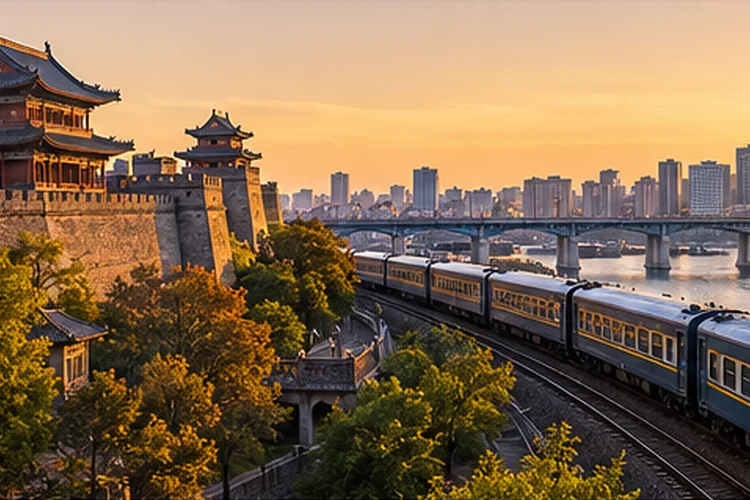
In China, a classic east-coast corridor might connect Beijing → Shanghai → Hangzhou, while a longer inland route could continue toward destinations such as Xi’an, Chengdu, or Chongqing.
China’s network is so extensive that trying to cross the country repeatedly can add enormous mileage even when high-speed trains are available.
South Korea works especially well as a north-to-south journey, while Japan naturally supports linear routes running from Tokyo toward Kansai, Hiroshima, and Kyushu – or north toward Tohoku and Hokkaido.
Think in lines rather than loops. Every time your route doubles back, ask whether changing the order of cities could remove a transfer.
Use China’s High-Speed Rail for Major City Clusters
China requires the most disciplined geographic planning simply because the country is enormous.
The high-speed network makes journeys between distant cities realistic, but that does not mean every famous destination belongs in the same itinerary.
By the end of 2025, China had around 165,000 kilometers of operating railway, including more than 50,000 kilometers of high-speed lines.
Instead of choosing isolated cities, build clusters.
Beijing can anchor northern China. Shanghai works naturally with cities in the Yangtze River Delta, while Chengdu and Chongqing form another useful western pairing. Xi’an can work as a strategic bridge when heading between northern and western destinations.
For international travelers, the official China Railway 12306 platform supports ticket purchases using eligible foreign passports, along with ticket changes and refunds under its stated rules.
Because large stations can require time for security and navigation, do not treat a departure like a European commuter train. Arriving comfortably early makes long-distance travel considerably less stressful.
Turn Korea Into a North-to-South Rail Journey
South Korea is compact enough that travelers often underestimate how useful its railway system can be.
The main Gyeongbu corridor runs between Seoul and Busan, covering roughly 447 kilometers. KTX services connect major cities along this axis, while other high-speed and conventional routes extend toward destinations such as Mokpo, Yeosu, Gangneung, Pohang, and Andong.
A very efficient first route is:
Seoul → Gyeongju → Busan
That sequence combines a modern capital, one of Korea’s major historical centers, and the country’s biggest southern port without significant backtracking.
Korea has also continued expanding useful cross-regional links. The Donghae Line KTX-Eum began direct Gangneung–Busan operations in December 2025, linking east-coast destinations including Donghae, Uljin, Pohang, and Gyeongju on the way south.
This creates interesting alternatives to the standard return-to-Seoul model.
Instead of using Seoul as the start and end of every excursion, plan a continuous journey through the peninsula.
Match the Japanese Shinkansen Line to Your Route
Japan becomes easiest to understand once you stop thinking about “the Shinkansen” as one railway.
Different lines serve different corridors.
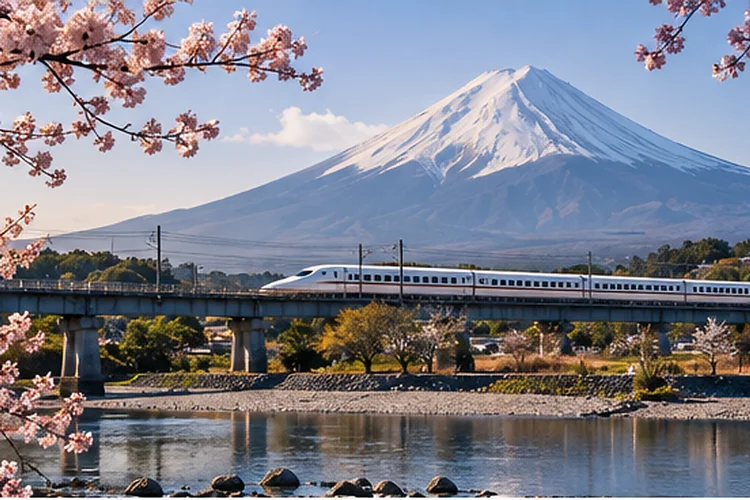
The Tokaido-Sanyo axis links Tokyo with Kyoto, Shin-Osaka, Hiroshima, and farther western destinations. The Tohoku network leads north from Tokyo, while Hokuriku provides another route toward places such as Kanazawa. The Kyushu Shinkansen links Hakata with Kagoshima-Chuo.
That makes route selection important.
For a first long-distance journey, Tokyo → Kyoto → Hiroshima → Fukuoka is exceptionally efficient geographically. A traveler more interested in regional Japan might instead choose Tokyo → Nagano → Hokuriku before eventually reconnecting with Kansai.
Do not automatically buy the nationwide Japan Rail Pass either. JNTO specifically recommends comparing regional passes because they may offer better value when most travel is concentrated in one area.
The pass should fit the itinerary – not dictate it.
Use Major Stations as Hubs, but Do Not Sleep in Every Hub
Rail hubs are useful because they reduce transfers, but that does not mean every station needs to become an overnight destination.
Shanghai Hongqiao, Seoul Station, Busan Station, Tokyo Station, Shin-Osaka, and Hakata are valuable partly because they connect numerous onward routes.
A smart itinerary separates transfer hubs from travel destinations.
Suppose you are moving through Japan from Kyoto toward Kyushu. Shin-Osaka may appear repeatedly in railway searches, but unless Osaka itself is part of your travel plans, there is no reason to add another hotel change simply because you pass through the station.
The same principle applies in Korea.
Seoul is a powerful railway hub, but routes such as the newer east-coast corridor make it possible to travel between regional destinations without constantly returning to the capital.
Reducing hotel changes often saves more energy than reducing train time.
Compare Rail Passes With Individual Tickets
Passes sound convenient, but unlimited travel is valuable only when you actually travel enough to justify it.
Japan offers both nationwide and regional JR products. The national pass covers most JR services, but urban subways and many private railways are outside its core coverage, while some premium Shinkansen services require additional arrangements.
Korea also offers travelers several train types rather than just KTX. Conventional services including ITX-Saemaeul and Mugunghwa trains can be useful when exploring smaller destinations that high-speed trains bypass.
China works somewhat differently.
Instead of assuming a pass model, travelers can use the official 12306 system to search routes and purchase individual journeys. The platform uses real-name ticketing, and foreign travelers can use valid passports that meet its requirements.
Before purchasing anything, calculate your actual long-distance legs. Convenience matters, but paying for unlimited mileage that you never use does not make a trip more efficient.
Treat International Transfers as Part of the Route
The biggest break in a China-Korea-Japan railway itinerary occurs when you change countries.
Domestic rail systems may be excellent, but the seas between the countries mean your overall journey is not one continuous train route.
That is not necessarily a problem.
Think of the flight or international ferry connection as a strategic bridge between national rail corridors. For example, you might finish your Korean rail journey in Busan rather than returning to Seoul if your next international connection works from the southern part of the country.
Likewise, ending a Japanese route in Fukuoka can make more geographic sense than riding all the way back to Tokyo purely because your trip began there.
The same logic applies when choosing your Chinese exit city.
Compare international connections before finalizing the rail itinerary. A perfectly optimized domestic route can still become inefficient if it leaves you in the wrong city for the next country.
Make Station Location Part of Your Planning
Not every station carrying a familiar city name is located where you expect.
Large Asian cities may have several major railway terminals, and high-speed trains can use stations outside the historic center. That affects hotel choice, transfer time, and how useful a particular train really is.
When comparing departures, check the exact station rather than simply looking at the city.
This matters particularly in China, where major metropolitan areas can contain several high-capacity stations. The official 12306 search system lists individual stations rather than treating each city as one generic departure point.
The same concept applies in Korea and Japan, where services may depart from different hubs depending on the route.
A train that saves 25 minutes on paper may not be faster overall if reaching its departure station requires another hour of urban transporation.
Door-to-door time is the number that actually matters.
Leave Space Around Peak Travel Periods
Rail efficiency depends on availability as much as speed.
Popular trains can become heavily booked during holidays and peak domestic travel periods. Even when another departure exists, losing your preferred service can disrupt hotel check-in times, connecting trains, or international departures.
Reserve critical segments early enough for the season you are traveling in, but avoid turning the entire trip into a rigid chain of reservations.
China’s 12306 platform, Korea’s KORAIL booking system, and the individual JR companies in Japan should be your primary places for checking official schedules and ticket conditions.
Also leave buffer time around international travel days.
A slightly slower itinerary with a spare evening is usually more convinient than one where a delayed regional train threatens your flight to the next country.
Use Slower Trains Where They Add Something
Optimization does not mean choosing the fastest train every time.
High-speed rail is brilliant for covering long distances, but conventional trains often provide access to coastal towns, rural communities, and smaller historical destinations.
In Korea, Mugunghwa and other conventional services stop at smaller stations that faster trains may bypass. Japan similarly has extensive regional JR and private railway networks beyond the main Shinkansen corridors.
The ideal strategy is to use high-speed rail for the boring distance and slower transport where the landscape or destination makes the journey worthwhile.
Spend two hours at high speed getting between major regions, then switch to a local train for the final section.
That is usually more rewarding than treating the entire journey as a race.
Optimizing regional rail routes across China, Korea, and Japan is ultimately about direction, not speed.
China rewards city clustering because of its enormous distances, Korea works beautifully as a north-to-south corridor, and Japan becomes much easier once you match your destinations to the correct Shinkansen and regional networks.
Build each country’s rail journey separately, then connect those routes through strategically chosen international gateways. Compare passes with individual fares, check exact stations, reduce accomodation changes, and use slower trains when they provide better regional access.
Most importantly, avoid backtracking simply because a famous city feels like the obvious hub. Open a map before opening the booking app. A clean geographic route usually saves more time and money than chasing the fastest train on every individual segment.