Six weeks sounds like a long vacation until you open a map of Central Asia.
Kazakhstan is enormous, Kyrgyzstan’s mountain roads are slow, Uzbekistan has enough Silk Road cities for weeks of exploring, and Tajikistan can turn a relatively short distance into a full day on spectacular high-altitude roads.
That is why learning how to structure a six-week journey across Central Asian countries is mostly about restraint. Instead of trying to visit every capital and famous landmark, build the trip around a logical east-to-west or north-to-south flow.
A practical first journey can connect Kazakhstan, Kyrgyzstan, Uzbekistan, and Tajikistan.
This mix gives you modern cities, nomadic landscapes, historic caravan centers, alpine lakes, desert architecture, and the Pamir or Fann Mountains without turning the entire trip into a sequence of border crossings.
The biggest advantage of six weeks is flexibility. You can spend longer in places that deserve it and still leave several days for mountain weather, slower transport, or unexpectedly complicated connecions.
Start With a Route That Minimizes Backtracking
Central Asia rewards geographic planning.
For most travelers, a useful sequence is Kazakhstan → Kyrgyzstan → Uzbekistan → Tajikistan. Almaty sits relatively close to Kyrgyzstan, while Uzbekistan provides a natural cultural bridge toward Tajikistan.
Do not automatically include all five former Soviet Central Asian republics. Turkmenistan can be fascinating, especially for Merv and Ashgabat, but its entry arrangements and transport logistics can make a six-week itinerary noticeably more complicated.
Four countries are enough to create enormous variety.
A simple allocation might be six days in southeastern Kazakhstan, nine in Kyrgyzstan, twelve in Uzbekistan, eleven in Tajikistan, and four flexible days spread throughout the trip.
Those buffer days are not wasted—they protect the entire itinerary when a mountain road, train, or border transfer takes longer than expected.
Week One: Use Almaty as the Gateway to Kazakhstan
Kazakhstan is so large that a six-week regional trip should not attempt to cover the whole country.
Start in Almaty and concentrate on southeastern Kazakhstan. Spend two or three days exploring the city, then use the remaining time for natural landscapes such as Charyn Canyon, Kolsai Lakes, or nearby mountain areas.
Kazakhstan’s official tourism information places Charyn Canyon roughly 195 kilometers east of Almaty and describes its best-known Valley of Castles as a major visitor area.
This approach avoids the temptation to add Astana simply because it is the capital. Flying north and then returning south can consume valuable time unless modern architecture and northern Kazakhstan are major priorities.
After Almaty, continue toward Bishkek. Keeping the first section geographically compact gives the trip a relaxed start before transportation becomes more adventurous.
Week Two: Slow Down Around Kyrgyzstan’s Mountain Landscapes
Kyrgyzstan deserves more time than many first itineraries give it.
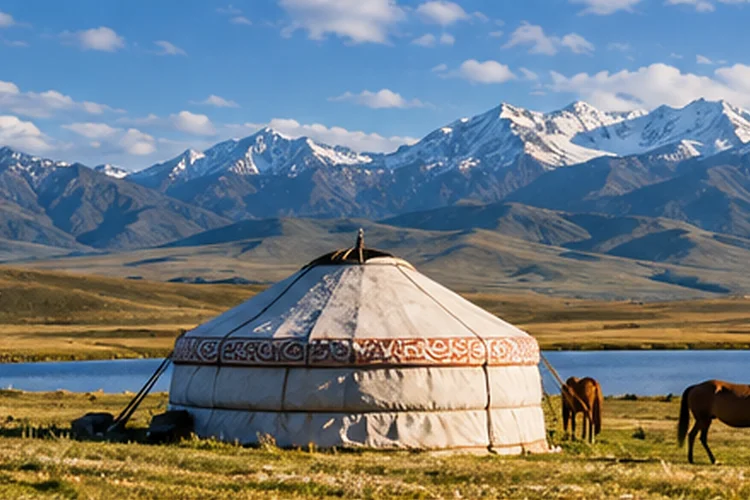
Use Bishkek as an arrival point, but do not spend the whole week in cities. The country’s strongest travel experiences are usually around lakes, mountain valleys, yurt camps, and smaller communities.
A good loop can combine Bishkek → Issyk-Kul → Karakol → southern Issyk-Kul → Song-Kul → Bishkek, adjusting the exact route for season and road conditions.
Visit Kyrgyzstan currently promotes multi-day circuits connecting Issyk-Kul, Song-Kul, Burana Tower, Karakol, Jeti-Oguz, and other mountain destinations. Its published itineraries also show how road transfers of four to six hours are normal between major stops.
That is an important planning lesson: distances may look short, but mountain roads slow everything down.
Avoid changing accommodation every night. Stay two nights around Issyk-Kul or Karakol and at least one night in a yurt camp if conditions allow.
Weeks Three and Four: Let Uzbekistan Be the Cultural Centerpiece
Uzbekistan is where transportation generally becomes easier.
Its historic cities fit naturally into a linear route, and rail is far more useful here than in the mountainous sections of Kyrgyzstan and Tajikistan.
A classic sequence is Tashkent → Samarkand → Bukhara → Khiva.
Uzbekistan’s official tourism portal recommends trains for routes from Tashkent through Samarkand and Bukhara toward Khiva, and the Afrosiyob high-speed service operates on important sections of the network.
Give Samarkand at least three nights rather than treating Registan as a one-day photo stop. The city was a major Silk Road center and includes Shah-i-Zinda, Gur Emir, Bibi-Khanum, and Ulugbek’s astronomical legacy alongside Registan itself.
Spend another two or three nights in Bukhara. Khiva can follow for two nights, while Tashkent works well as both an arrival hub and a place to reset between longer journeys.
Do Not Fill Every Uzbek Day With Monuments
After a week of madrasas, mausoleums, and mosques, even spectacular architecture can begin to blur together.
Schedule slower mornings, market visits, neighborhood walks, or a completely unplanned afternoon.
Long-term travel is different from a five-day city break. Energy management matters almost as much as route efficiency.
Week Five: Enter Tajikistan Through Its Accessible Western Side
Tajikistan changes the pace again.
Instead of immediately committing to the Pamir Highway, spend your first days around Dushanbe, Penjikent, or the Fann Mountains.
The official Tajik tourism portal identifies Penjikent as a practical base for exploring the Fann Mountains and notes their relatively good access from the Zeravshan Valley.
This creates a useful transition from Uzbekistan’s urban heritage into mountain travel.
Spend several days around alpine lakes or hiking areas, depending on your fitness and the season. Then continue toward Dushanbe for museums, restaurants, supplies, and preparation for the final stage.
Border arrangements in Central Asia can change, so verify the exact crossing you plan to use shortly before departure rather than building the entire journey around an old travel report.
Tajikistan’s tourism authority itself lists different border roads and notes that some crossings are not open to tourists.
Week Six: Choose Between the Pamirs and a Slower Tajikistan Finish
The final week should depend on season, experience, and tolerance for difficult roads.
The Pamir Highway is an extraordinary option, but it is not a casual day trip. Tajikistan’s official tourism site describes the route through Gorno-Badakhshan as more than 700 kilometers long, with passes exceeding 4,000 meters.
A full Pamir route normally deserves substantially more than a few rushed days.
If you have around ten days available, a journey through Dushanbe, Kalaikhum, Khorog, the Wakhan region, Murghab, and toward Kyrgyzstan becomes more realistic. Official Tajik itineraries commonly allocate about ten days to longer Pamir crossings.
Remember that Gorno-Badakhshan has special entry requirements. Tajikistan’s Ministry of Foreign Affairs states that travelers entering the GBAO/Pamir region require the relevant permit.
If the Pamirs feel too ambitious, spend the final week exploring the Fann Mountains, Dushanbe, Khujand, and other western areas instead. A slower ending can be more enjoyable than turning the final days into an endurance test.
Build Four Buffer Days Into the Six Weeks
Long-distance Central Asian travel should never be scheduled to the hour.
Keep at least four flexible days across the journey. One can sit between Kyrgyzstan and Uzbekistan, another before Tajikistan, and the final two near the end of the trip.
Mountain routes can be affected by snow, rockfalls, flooding, or poor road conditions. The Tajik tourism authority, for example, notes seasonal disruptions from snowfall, avalanches, rockfalls, and flooding on some remote roads.
These spare days also prevent travel fatigue.
Use them when you discover somewhere worth staying longer. A buffer day in Samarkand, Karakol, or the Fann Mountains rarely feels wasted.
Match the Journey to the Season
Timing can completely change this itinerary.
High-altitude Kyrgyzstan and Tajikistan are easiest to combine when mountain routes and yurt camps are operating. Visit Kyrgyzstan’s published lake itineraries concentrate heavily on the warmer period from late spring through September.
Lower-elevation Uzbekistan can become extremely hot in midsummer, while southeastern Kazakhstan also has strong seasonal variation.
This creates a useful compromise: late spring and early autumn can balance city sightseeing with outdoor travel, while midsummer is stronger for high mountain areas.
Whatever month you choose, check road access, railway tickets, border requirements, and local accomodation again before each major transition rather than assuming conditions remained unchanged since you planned the trip.
Structuring a six-week journey across Central Asian countries works best when you resist the urge to see everything.
Kazakhstan provides an easy introduction around Almaty, Kyrgyzstan slows the trip down with alpine lakes and nomadic landscapes, Uzbekistan delivers the strongest concentration of Silk Road cities, and Tajikistan finishes the journey with dramatic mountain terrain.
The key is to travel in one general direction, give mountain regions more time than the map suggests, and protect the itinerary with several flexible days.
Start with four countries rather than five, book only the critical transport in advance, and let some sections remain adjustable.
Six weeks gives you something short trips rarely offer in Central Asia: enough time to stop treating the region as a checklist and actually experience the distances between its cities, deserts, and mountains.