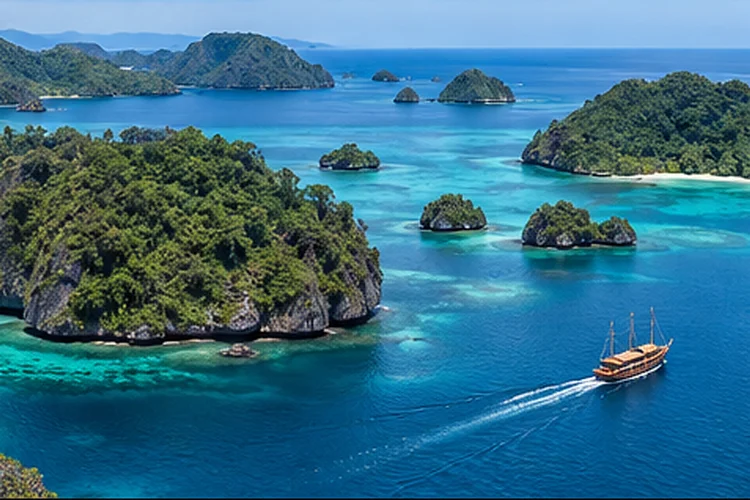
Indonesia is the kind of country that can make a simple itinerary complicated very quickly. Two destinations may look close on a map but require a flight through another island, an overnight ship, or several separate ferry connections.
Add weather, holiday traffic, and remote ports, and route planning becomes almost as important as choosing where to go.
That is why advanced route planning for Indonesia’s multi-island travel network should begin with transport corridors rather than a list of famous destinations.
Indonesia officially counts 17,380 islands, so there is no realistic way to approach the country as one continuous island-hopping chain.
Instead, efficient travelers combine major aviation hubs, Java’s railway network, short ASDP ferry crossings, and longer PELNI services where they make geographical sense.
The goal is simple: reduce unnecessary backtracking while keeping enough flexibility for Indonesia’s unpredictable sea and transport conditions.
Think in Transport Regions, Not Individual Islands
The biggest improvement you can make is to stop planning Indonesia island by island.
Break the country into transport regions instead. Java and Bali form one highly connected corridor. Bali, Lombok, Sumbawa, and Flores can become another.
Sulawesi works around hubs such as Makassar and Manado, while Maluku often revolves around Ambon and Ternate. Farther east, Sorong becomes an important gateway for Raja Ampat.
This approach reflects how Indonesia’s actual transport system operates.
ASDP says it operates more than 160 ferries across more than 300 routes and 36 ports, linking important short-distance crossings around the archipelago.
PELNI and government-supported pioneer shipping serve a different role, connecting much longer or less commercially attractive routes.
Design your itinerary around those networks instead of trying to draw the shortest possible line between tourist attractions.
Use Java as the Rail Backbone of a Longer Journey
Java is where Indonesia’s transport planning becomes easiest.
Rather than flying repeatedly between Jakarta, Yogyakarta, Surabaya, and eastern Java, use intercity trains wherever the route fits. KAI operates long-distance passenger services between strategic destinations, with economy, executive, and other classes available.
Some Java routes exceed 1,000 kilometers, showing how useful rail can be for crossing large sections of the island without airport transfers.
A practical corridor could look like:
Jakarta → Yogyakarta → Surabaya → Banyuwangi → Bali
The final section can continue overland toward Ketapang and then across the Bali Strait.
KAI’s official Access by KAI platform provides schedules, ticket purchases, changes, cancellations, and journey information digitally.
Using rail here saves your flights for journeys where aviation provides a much bigger time advantage.
Match ASDP Ferries With Short Island Gaps
ASDP crossings are particularly useful when two islands are geographically close.
Classic examples include Java-Bali, Bali-Lombok, Lombok-Sumbawa, and several links around Sulawesi, Maluku, and Nusa Tenggara.
During the 2026 Lebaran period, ASDP highlighted major corridors including Ketapang-Gilimanuk, Padangbai-Lembar, Kayangan-Pototano, Bajoe-Kolaka, Bira-Pamatata, Bitung-Ternate, Hunimua-Waipirit, and Bolok-Rote.
These routes demonstrate how a longer overland-and-sea itinerary can work.
For example, Bali → Lombok → Sumbawa can be more interesting by ferry and road than by taking three separate flights. You experience changing landscapes instead of repeatedly returning to airports.
But do not assume every ferry runs like an urban metro.
Schedules, weather, loading times, and holiday demand can affect the trip. Always check the current operator information before building an expensive connection immediately afterward.
Use PELNI for Long Routes Only When Time Is Part of the Experience
PELNI opens another layer of Indonesia.
Its passenger ships and associated pioneer routes connect ports that may be awkward or expensive to combine by air. PELNI maintains online reservation and pioneer-schedule systems for checking available journeys.
Government-supported pioneer shipping remains particularly important for remote and outer islands. In 2026, the Ministry of Transportation reported 107 pioneer passenger-shipping routes alongside other subsidized maritime services.
However, a long-distance ship should not automatically be chosen because it is cheaper.
If a voyage consumes two days and you only have a ten-day holiday, flying may be the better decision. PELNI becomes much more attractive on trips lasting several weeks, when an overnight or multi-day crossing becomes part of the adventure.
Think of it as slow travel rather than merely transportation.
Fly Between Distant Regional Hubs
Indonesia’s geography eventually defeats even the most enthusiastic ferry traveler.
Flying makes sense for major jumps such as Java to Sulawesi, Bali to Maluku, or western Indonesia toward Papua. The important strategy is to fly hub to hub, then explore locally from that gateway.
For example, Sorong functions as a primary entry point for Raja Ampat. Indonesia Travel identifies Sorong as the departure point for the marine region, with onward journeys continuing by sea.
A Raja Ampat journey may therefore work as:
Major Indonesian hub → Sorong → Waisai → smaller island transfers
That is more efficient than trying to combine individual islands directly from unrelated destinations.
Use the same logic elsewhere. Reach Ambon first for parts of Maluku or Makassar for many Sulawesi connections, then build shorter regional routes around them.
It reduces expensive and awkward connecions between small airports.
Build Hub-and-Spoke Sections Into Long Trips
Not every journey needs to move continuously forward.
Sometimes staying in one hub and making shorter excursions is more efficient than changing hotels every night.
Imagine a six-week trip. You could spend one section moving linearly across Java, then use Bali as a temporary base before continuing east. Later, Makassar or Ambon might work as another transport reset point.
These hubs give you access to ATMs, larger supermarkets, airports, reliable accomodation, and better chances of reorganizing plans when something changes.
The hub-and-spoke method becomes especially valuable in eastern Indonesia, where local schedules may not align perfectly.
It also limits travel fatigue. A complicated itinerary feels much easier when every fourth or fifth stop provides two or three nights without packing again.
Separate Fast Routes From Adventure Routes
A good itinerary does not use the same transportation philosophy everywhere.
Use trains where rail is efficient. Take short ferries when islands naturally connect. Fly across huge distances. Save slow ships and complicated overland sections for places where the journey adds something meaningful.
Consider two travelers going from Java toward Flores.
One traveler interested mainly in Komodo could fly to Labuan Bajo and save days. Another with three weeks available might move through Bali, Lombok, and Sumbawa before reaching Flores, experiencing multiple islands along the way.
Neither route is automatically better.
The advanced approach is matching transportation speed to the purpose of that section of the trip.
Fast transport should eliminate boring distance. Slow transport should add an experience.
Protect the Itinerary With Buffer Days
Indonesia is not the place for a schedule where every connection has a 45-minute margin.
Maritime transport remains essential across the country, especially for remote and outer regions. During the 2026 Lebaran season alone, the Ministry of Transportation prepared hundreds of ships and hundreds of ports for increased passenger movement.
That scale also illustrates how dependent inter-island mobility remains on sea conditions and port operations.
Keep at least one buffer night before important international flights.
For remote regions, two is safer. If you finish Raja Ampat on Friday and have an expensive international departure from Jakarta early Saturday, one cancelled local transfer could destroy the plan.
Instead, return to Sorong and then your major departure hub earlier.
Those buffer days can still be enjoyable. Treat them as food, market, museum, or rest days rather than wasted time.
Avoid Trying to Cross the Entire Country in One Trip
Indonesia is too large for completionist travel.
Even a month can disappear quickly if you attempt Sumatra, Java, Bali, Nusa Tenggara, Sulawesi, Maluku, and Papua in one itinerary.
A smarter three- or four-week route might combine Java + Bali + Nusa Tenggara, or Sulawesi + Maluku, rather than connecting destinations simply because they are famous.
Longer trips can add another regional cluster by air.
This also reduces transporation costs. Constant island changes mean repeated taxis, port fees, baggage handling, airport transfers, and overnight stops that rarely appear in the initial budget.
Count major transfers before you finalize the trip.
If a 21-day itinerary contains ten full or partial transport days, remove something.
Check Current Schedules Close to Travel Day
Long-range planning in Indonesia works best when you separate route structure from exact schedules.
Decide months ahead that you want to travel Java → Bali → Lombok, but reconfirm individual ferries, ships, and flights closer to departure.
PELNI provides current reservation searches, while ASDP publishes route and port information online.
This is particularly important around major Indonesian holidays, when demand can surge dramatically.
Avoid relying on an old blog post for a ferry departure time. A route may still exist while its operating pattern has changed.
Build a strong framework, then update the details as you travel.
Advanced route planning for Indonesia’s multi-island travel network is mostly about choosing the right transport mode for each distance.
Java works brilliantly with rail, neighboring islands often connect naturally through ASDP ferries, PELNI can turn long sea journeys into part of the adventure, and flights remain essential when the archipelago becomes too geographically spread out.
The smartest itineraries combine these systems rather than relying on only one.
Start by grouping destinations into regional clusters. Choose major hubs, minimize backtracking, and keep buffer days before critical flights or remote transfers.
Most importantly, travel fewer islands better. Indonesia’s size means there will always be somewhere left for another journey – and that is far more enjoyable than spending half your holiday inside airports, ports, and buses.