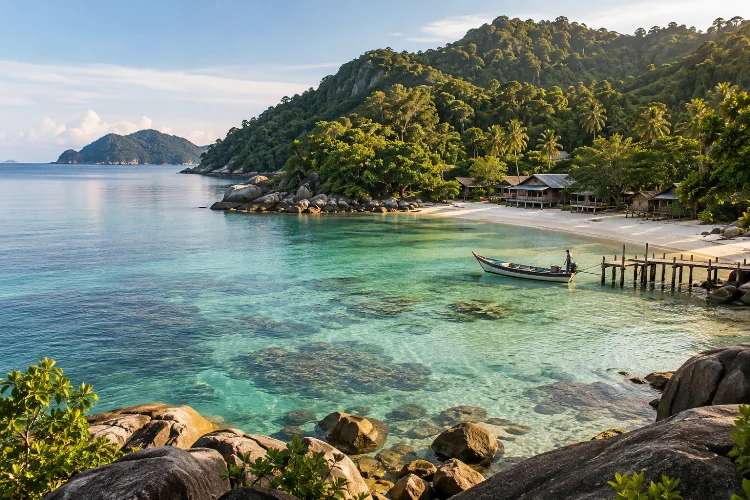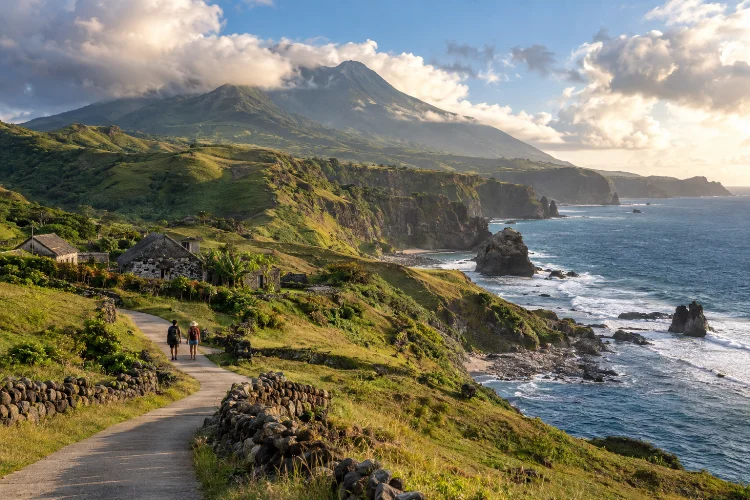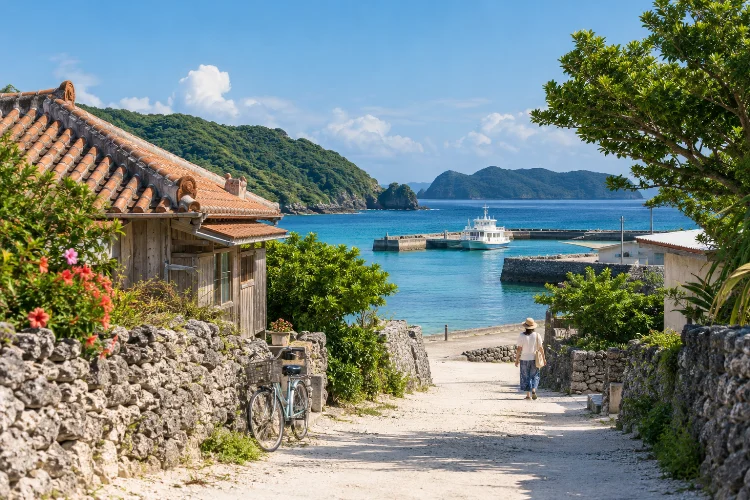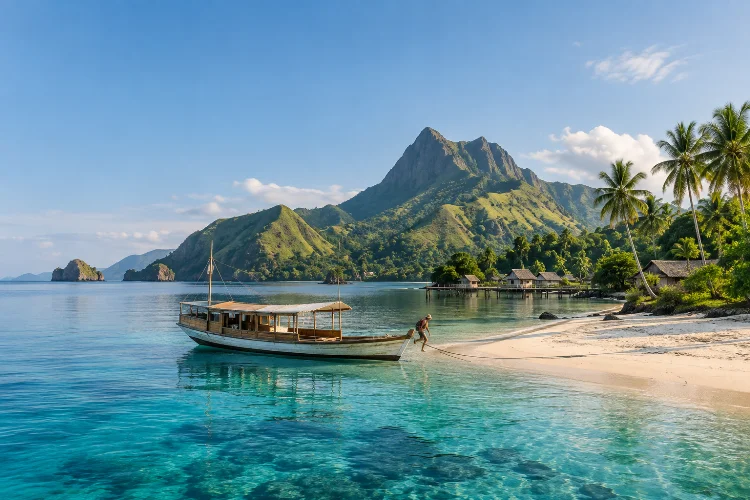
Bali may be Indonesia’s best-known island, and Lombok has become a natural second stop, but the Indonesian archipelago stretches far beyond both.
Keep travelling east and north, and the scenery becomes wilder, ferry journeys get longer, tourist infrastructure thins out, and entire island groups begin to feel like another side of the country.
Exploring Indonesia’s remote islands beyond Bali and Lombok can mean diving among coral gardens in Raja Ampat, walking past colonial forts in Banda Neira, crossing empty beaches in the Kei Islands, or visiting traditional communities among Alor’s volcanic mountains.
These destinations require more planning than a quick Bali getaway. Flights and boats may operate less frequently, accomodation can be simpler, and weather has a greater impact on travel plans. That extra effort, however, is part of the attraction.
Indonesia’s less-visited islands combine extraordinary marine environments with distinctive languages, food traditions, architecture, and histories that can change completely from one region to the next.
Raja Ampat: Go Beyond the Famous Viewpoints
Raja Ampat is hardly unknown among divers, but its remote location in Southwest Papua still keeps it far outside the typical Bali-Lombok itinerary.
The archipelago contains more than 1,500 small islands, reefs, and cays. Its waters are known for exceptional marine biodiversity, while limestone formations around places such as Wayag and Pianemo create the dramatic landscapes that appear in many photographs of eastern Indonesia.
Yet Raja Ampat becomes more interesting when you move beyond the viewpoints. Village visits, snorkeling close to smaller islands, mangrove areas, and stays in locally run homestays reveal another side of the region.
Sorong is the primary gateway, with travellers generally continuing by sea toward Waisai or other parts of the archipelago. Boat schedules and local connections should always be checked close to the travel date because conditions can change.
For travellers willing to slow down, Raja Ampat works better as a multi-day island journey than a rushed collection of Instagram locations.
Banda Islands: Where Tropical Beauty Meets Spice History
The Banda Islands in Maluku offer something very different.
Banda Neira is surrounded by volcanic scenery and clear water, but the islands are also deeply connected to the global spice trade. Nutmeg and mace were historically native to the Banda Islands, making the region enormously valuable to European colonial powers.
That history remains visible around Banda Neira.
Fort Belgica, Fort Nassau, old colonial buildings, nutmeg plantations, and sites linked to Indonesian independence figures turn a small tropical island into an unusually dense historical destination. The wider Banda landscape is on Indonesia’s UNESCO World Heritage Tentative List.
Then there is the sea. Coral reefs surround the volcanic islands, so a morning exploring forts can easily become an afternoon snorkeling or diving.
Banda is ideal for travellers who want culture and marine adventure in the same place rather than choosing one or the other.
Kei Islands: Slow Down on Maluku’s Long White Beaches
Farther southeast in Maluku, the Kei Islands offer the kind of tropical scenery many travellers imagine before visiting Indonesia – long beaches, shallow turquoise water, fishing villages, and noticeably fewer crowds.
One of the area’s best-known places is Ngurbloat Beach, also called Pasir Panjang. It lies near Ngilngof in Southeast Maluku and is known for its extended stretch of pale sand.
Kei is less about racing between major attractions and more about slowing down.
A good day might involve swimming in the morning, eating grilled seafood, visiting a village, and spending the afternoon watching the light change over the water. The rhythm feels considerably different from resort-centered island tourism.
Getting around can require a mixture of local cars and boats, so leave flexibility in your itinerary. Trying to schedule every hour is rarely helpful on remote islands where tranport depends heavily on local conditions.
Alor: Dive, Hike, and Explore Traditional Villages
Alor sits at the eastern end of East Nusa Tenggara and feels dramatically removed from the major tourist corridors farther west.
The Alor Archipelago consists of numerous islands, while the waters between Alor and Pantar contain dozens of dive sites. Strong currents, steep underwater walls, and rich marine life have given the region a strong reputation among experienced divers.
The attraction is not limited to diving.
Mountainous interiors and traditional communities give the main island a strong cultural identity. Indonesia Travel highlights Takpala village as one location where traditional architecture and local customs remain visible.
This combination makes Alor particularly appealing to travellers who get bored spending an entire trip on the beach.
You can dive one day and explore inland villages the next. Just remember that sites may be widely seperated, so building spare time into the itinerary is important.
Wakatobi: Explore Four Islands, Not Just One Resort
Wakatobi lies off Southeast Sulawesi and takes its name from its four principal islands: Wangi-Wangi, Kaledupa, Tomia, and Binongko.
The surrounding national park covers about 1.39 million hectares and is overwhelmingly marine. UNESCO designated Wakatobi as a Biosphere Reserve in 2012, recognizing its coral reefs and broader coastal ecosystems alongside the communities that depend on them.
Diving and snorkeling are obvious reasons to visit, but the archipelago becomes more rewarding when you experience multiple islands.
Wangi-Wangi functions as an important gateway, while Tomia has a particularly strong diving reputation. Smaller villages and island communities also provide opportunities to experience local food and maritime culture rather than seeing Wakatobi purely through its reefs.
Because most travel between islands involves boats, avoid designing an itinerary with tight same-day connections. Weather and operational changes can quickly reshape plans.
Sumba: A Different Kind of Island Escape
Sumba is easier to reach than some of the islands farther east, but culturally and visually it still feels worlds away from Bali.
Instead of dense tropical resort development, much of Sumba is associated with open grasslands, limestone hills, traditional villages, megalithic tombs, and distinctive high-roofed houses. Local communities also maintain traditions connected with Marapu ancestral beliefs.
The island’s coastline adds another dimension.
Large beaches and Indian Ocean surf attract surfers, while inland routes pass through rolling landscapes that can feel almost savanna-like during the drier months.
Sumba is large enough that trying to cover the whole island in two or three days usually creates more driving than exploring. It works better when divided into western and eastern sections, each with enough time for villages, waterfalls, beaches, and countryside.
For travellers wanting something beyond a conventional tropical beach trip, Sumba is one of Indonesia’s strongest alternatives.
Why Remote Island Travel Requires a Different Mindset
These islands reward travellers who are comfortable with uncertainty.
Connections that look simple on a map may involve a flight, a ferry, a local boat, and several hours of road travel. Weather can alter schedules, and services that are routine in Bali may be limited or unavailable on smaller islands.
That does not mean travelling without preparation.
Confirm boat and flight schedules shortly before departure, carry enough cash for areas with limited banking facilities, and avoid putting international flights immediately after complicated island transfers.
Also think about environmental impact. Coral reefs around destinations such as Raja Ampat and Wakatobi are not simply beautiful attractions – they are sensitive ecosystems.
Avoid touching coral, minimize single-use plastic, and use local guides who understand conservation rules.
Remote travel works best when convenience is not the main goal.
Choose Islands Based on the Experience You Want
Indonesia is so large that trying to combine Raja Ampat, Banda, Alor, Wakatobi, Kei, and Sumba into one normal vacation would create an exhausting amount of travel.
Instead, pick a theme.
For world-class marine environments, Raja Ampat, Alor, and Wakatobi deserve attention. Banda works beautifully for travellers interested in both diving and spice-trade history, while Kei is suited to quiet beaches and slower island life.
Sumba is the strongest choice when landscape and traditional culture matter as much as the ocean.
You can also group neigboring destinations by region rather than constantly flying across the country. A Maluku-focused trip, for example, can make more logistical sense than combining islands located thousands of kilometers apart.
Exploring Indonesia’s remote islands beyond Bali and Lombok reveals just how diverse the country really is.
Raja Ampat delivers spectacular marine landscapes, Banda combines reefs with global spice history, Kei encourages slow beach travel, Alor mixes diving with mountain culture, Wakatobi protects an enormous marine environment, and Sumba offers traditional villages and open landscapes.
None of these destinations is quite as effortless as Bali, and that is part of their appeal.
Choose one region, give yourself extra travel days, and resist the temptation to rush. Indonesia’s outer islands reward curiosity, patience, and a willingness to travel more slowly.
Start with the experience that interests you most, then build the route around the island rather than forcing the island into an overloaded itinerary.